
Alanya Shipyard (Tersane) – Where the Seljuks Ruled the Mediterranean
Picture this: 800 years ago, on this exact stretch of rocky coastline, warships were being built, armed and launched into the Mediterranean. The Alanya Shipyard — Tersane in Turkish — isn’t a reconstruction or a replica. It’s the real thing, still standing, still breathing history. Built between 1227 and 1228 by Seljuk Sultan Alaeddin Keykubat, it stands as the first Seljuk shipyard on the Mediterranean coast — and remarkably, it is the best-preserved Seljuk shipyard in Turkey.
The History Behind the Alanya Tersane – A Naval Powerhouse of the 13th Century
Built by a Sultan Who Thought Big
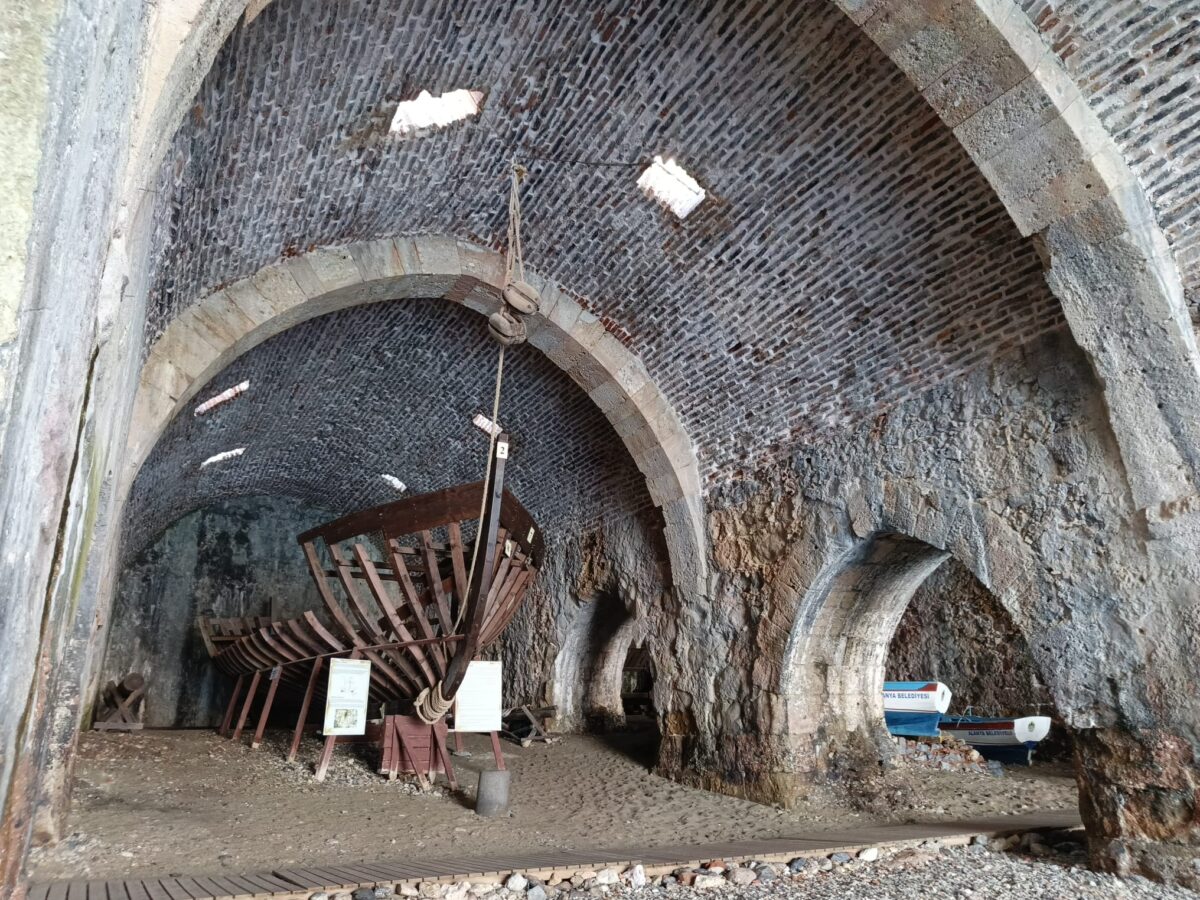
The shipyard was built in 1227 after an order given by Sultan Alaeddin Keykubat, and its location was carefully chosen to make the most of natural daylight — essential for the precision work of shipbuilding. This wasn’t a small operation. The shipyard consists of five arched chambers with a 56.5-metre sea-facing facade and a depth of 44 metres. Ships were built here, repaired here, and sent out to patrol and protect the eastern Mediterranean trade routes. The shipyard played a crucial role in the maritime history of the region, serving as a strategic stronghold for the Seljuk navy — protecting the coast from invasion and keeping trade routes open.
The Arsenal — The Muscle Behind the Ships
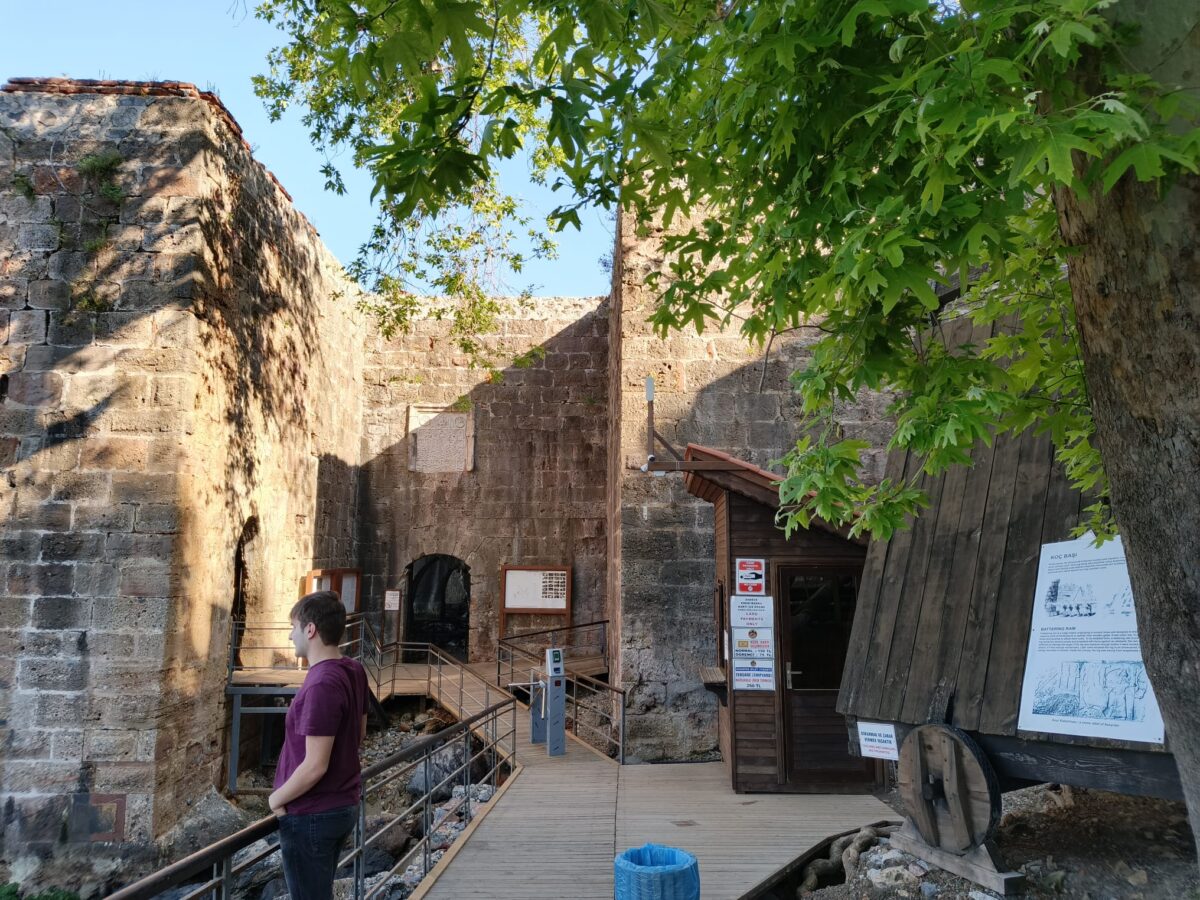
Right next to the shipyard sits its lesser-known but equally impressive companion. The arsenal was built on a 10-metre-high rock block in 1227 to protect the shipyard against attacks from the sea — a three-storey rectangular structure where warships and cannons were cast. Together, the shipyard and arsenal formed one of the most formidable coastal defence systems in the medieval Mediterranean world. And at the entrance, a commemorative inscription decorated with rosettes bearing the Sultan’s name is still clearly visible today — a small but powerful detail that makes the whole site feel genuinely alive.
What to See Inside the Alanya Shipyard Today
Five Arched Chambers & a Window into Seljuk Seafaring
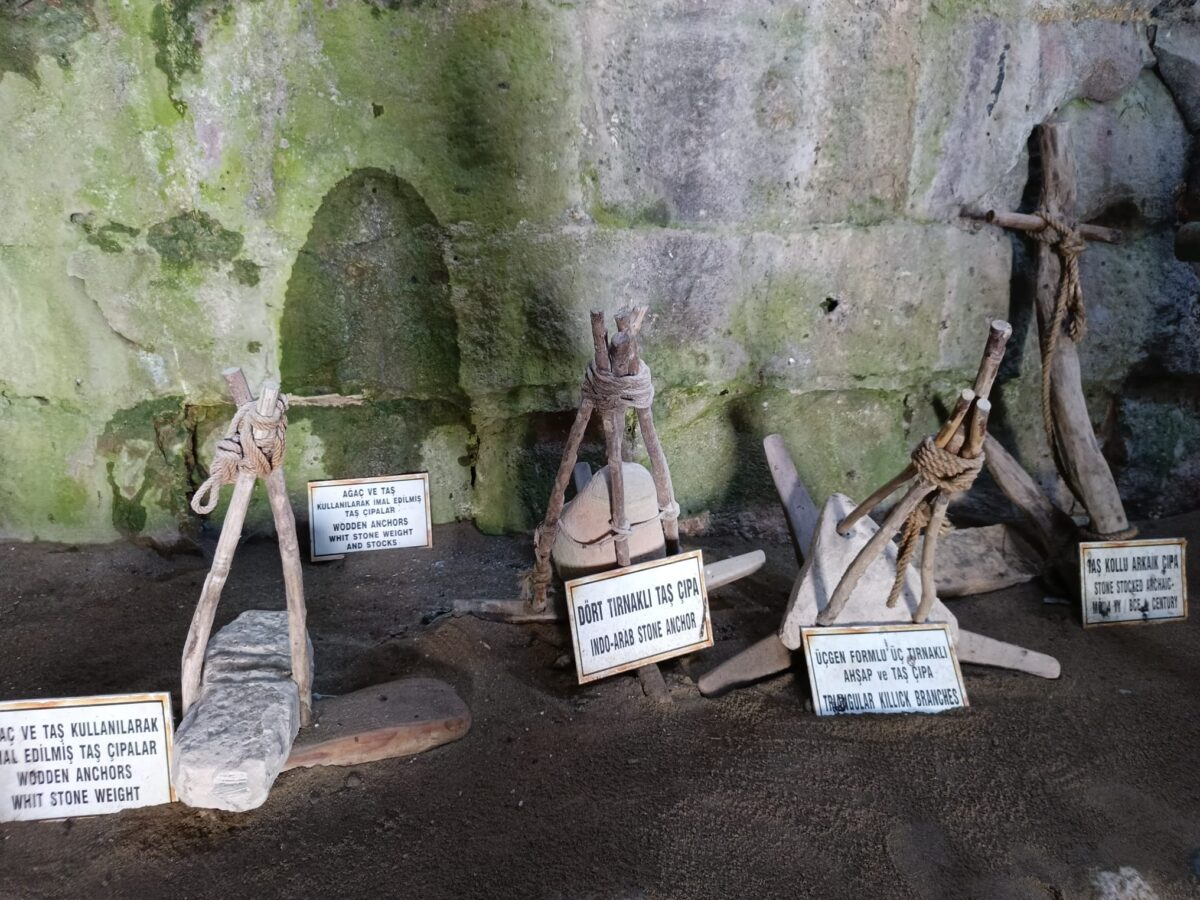
Step inside and the scale of the place hits you immediately. The five stone arched chambers stretch back from the sea, each one tall enough to have sheltered a fully rigged medieval vessel. Inside there is an exhibition demonstrating the history of shipbuilding and maritime navigation in the Seljuk period, including a model of a two-masted vessel called a çekevele — used primarily as a merchant and communication ship but easily converted into a fast warship during sea battles. The exhibition also includes a recreated navigator’s room, navigational tools and a collection of anchors. The display is not vast but its enough to make you stop and think about the sheer ambition of a landlocked Anatolian empire deciding to build a Mediterranean fleet.
Views, Light & Photography
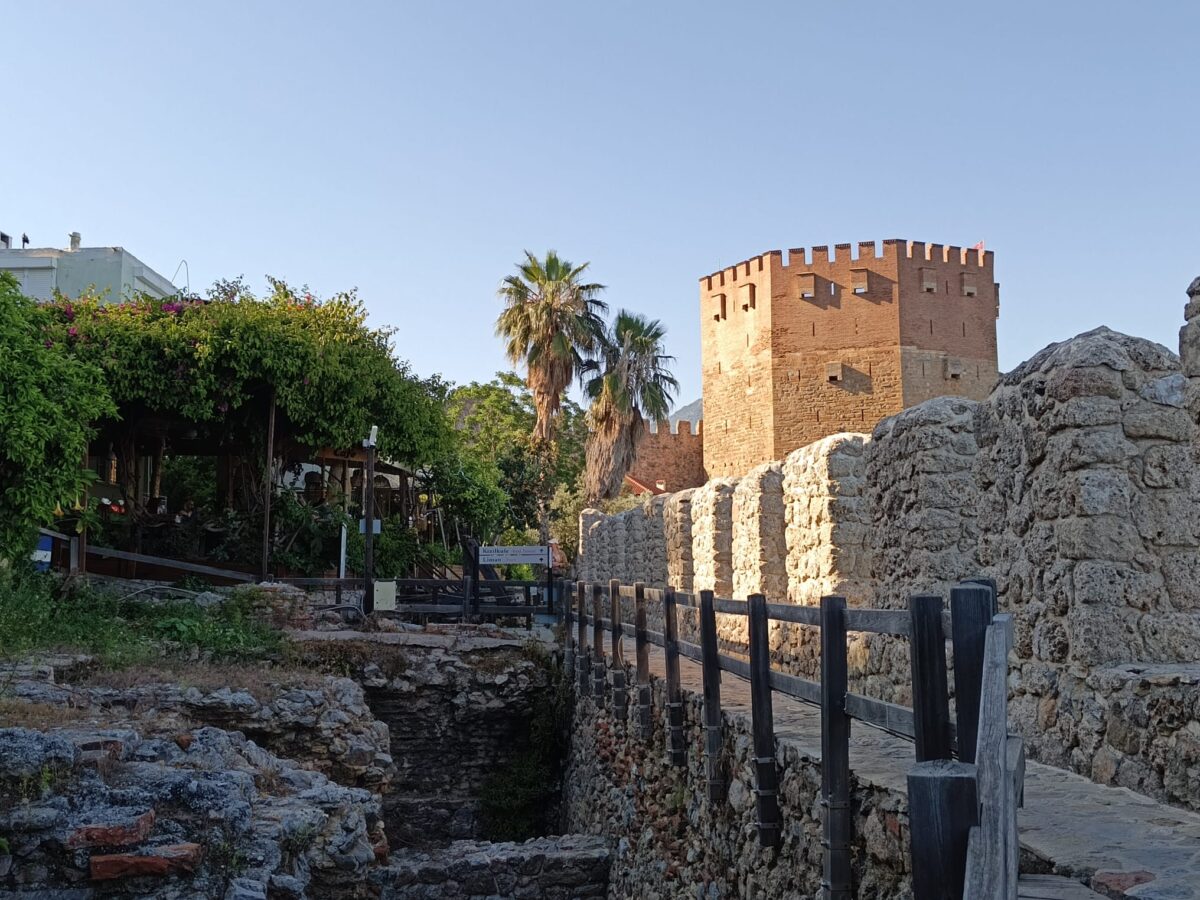
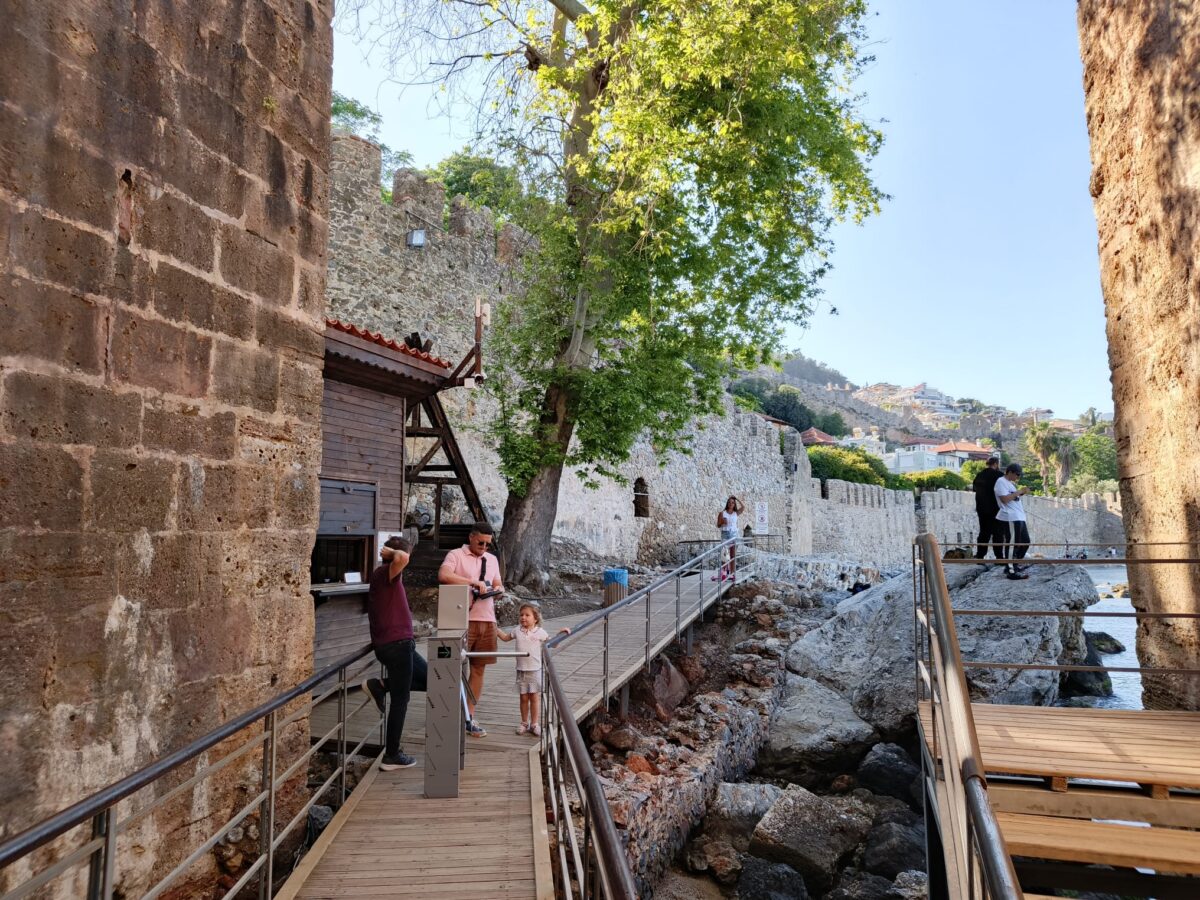
The Tersane is also quietly one of the best photography spots in Alanya. The dramatic arches, textured stone walls and the interplay of light and shadow within the chambers create compelling compositions — and the panoramic sea views from the site, with the Red Tower visible in the distance, offer some of the most iconic shots in the city. Come in the morning or late afternoon for the best light through those ancient arches.
Practical Info: Visiting the Alanya Shipyard
Getting There
The Tersane is easy to reach on foot from the Red Tower — one of Alanya’s most visited landmarks. Follow the narrow coastal path south from the Red Tower for about 300 metres and you’ll arrive at the shipyard entrance. The walk itself along the old city walls is worth doing slowly — there are great views of the harbour the whole way.
Tickets & Combining Your Visit
- The entrance fee – 150 TL per adult, 75TL per student.
- The Museum Card (Müze Kart) is not accepted.
- A Combined Ticket (Red Tower + Shipyard) – 250 TL. A combo ticket covering both the Shipyard and the Red Tower offers better value and a much fuller historical experience
- Payments by card only, no cash accepted.
Don’t Miss
Before you leave, make sure to stop at the Tersane café right on site — there are few better places in Alanya to sit with a coffee, eat ‘gözleme’, look out at the Mediterranean and think about the warships that once launched from this exact spot.
Features
FAQ
Is the Alanya Shipyard worth visiting if I've already seen the Red Tower?
Absolutely — and the two sites really shouldn't be separated. The shipyard served as a strategic stronghold for the Seljuk navy, used for the construction and maintenance of ships that patrolled the eastern Mediterranean — so it tells a completely different story to the Red Tower, even though they sit side by side. The Red Tower was the defence; the Tersane was the engine room behind it. Together they give you the full picture of how the Seljuks controlled this coastline.
How do I get to the Alanya Shipyard and is it a difficult walk?
The shipyard is located to the south of the Red Tower, reached by following a narrow coastal path for about 300 metres. It's accessible only by foot. It's a short and scenic walk along the old city walls with harbour views the whole way — but do wear comfortable, closed-toe shoes. The path and the site itself are on uneven ancient stone, so sandals or flip-flops are genuinely not that good idea.
Is there anywhere to sit down and eat or drink at the shipyard?
Yes — and it's one of the nicest spots in Alanya for exactly that. Two Tersane cafés sit right on site, with the Mediterranean directly in front of you and 800-year-old stone walls at your back. It's a brilliant place to rest after the walk from the Red Tower, grab a cold drink, eat something traditional and take in the view before heading back into the city.

Leave a Reply